Short answer
I started my e-commerce career in 2014 with print on demand. I sold T-shirts on Teespring, then personalized jewelry on Gearbubble, and made $15,000 in sales over about two and a half years. In June 2016 I moved to Shopify, built my own store, Perveengoods, and sold clothing, personalized products and dropshipping products. Over four years that store did $41,406 in total sales from 1,117 orders. Together, print on demand and Shopify brought in more than $56,000 in sales. These are sales figures, not profit. I am sharing the real numbers, the real screenshots, and the mistakes as well, so you can see what this kind of business actually looks like.
How my e-commerce journey started
I started my online career in 2012 as a web designer. I had no formal education in design or marketing. I learned everything online, by watching videos, reading, and taking free courses. I built sports news websites in WordPress and forums, then I took local freelance web design projects to build my experience.
In 2014 I decided to move into e-commerce. I was passionate about making money online and building something of my own, and I wanted to grow my skills. I did not have a big budget, and I did not have a warehouse or stock. That is why print on demand was the right place to start. You only pay for a product after a customer buys it, so the risk is low. The risk is not zero, though. You still have to find customers, and that is the hard part.
Part 1: Starting with print on demand
What I sold first, and why I picked print on demand
I started by selling T-shirts online on Teespring. I learned selling by actually selling. I researched design ideas, looked at what competitors were doing, and made my own designs in Photoshop and Illustrator with the basic graphic design skills I had. When the designs were ready, I started marketing and generating sales.
Print on demand made sense for me at that time for a few simple reasons:
- I did not need to buy stock in advance.
- I did not need a warehouse.
- I could test a design idea quickly and cheaply.
- If a design did not sell, I could move on to the next one without losing much money.
The work was in the design and the marketing. The printing, the packing and the shipping were handled by the platform. That let a one-person beginner focus on the two things that matter: finding a product people want, and putting it in front of them.
How I found customers without a big budget
Most of my sales came from organic marketing, not paid ads. I built a Facebook niche page and shared my products with people who already cared about that niche. That page became my main source of traffic. I also did paid promotions, but the organic audience was the bigger part of my sales in the early days.
This taught me something I still believe today. Before you spend money on ads, you need to know who your customer is and where they already spend time. A niche page, a group, or a community of real people who care about the topic is worth more than a big ad budget aimed at everyone.
How much I actually made with print on demand
Over about two and a half years in print on demand, I made $15,000 in sales from clothing and personalized jewelry. That is five figures in sales, and I am proud of it, because I started with nothing but basic design skills and a willingness to learn.
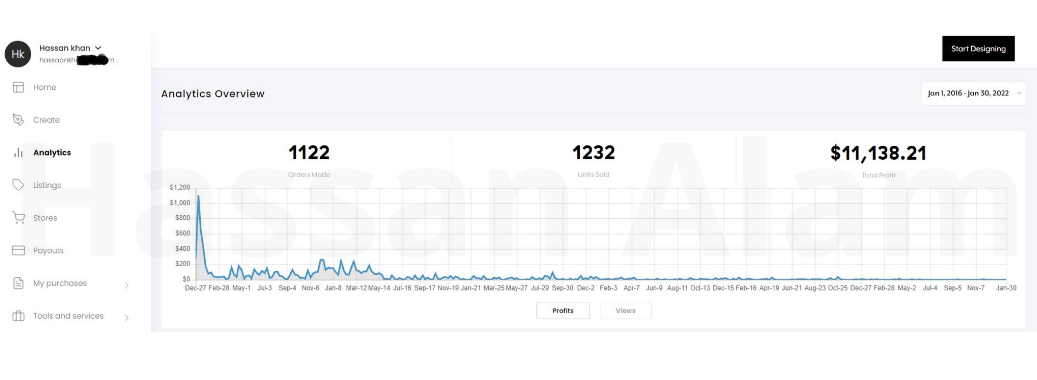
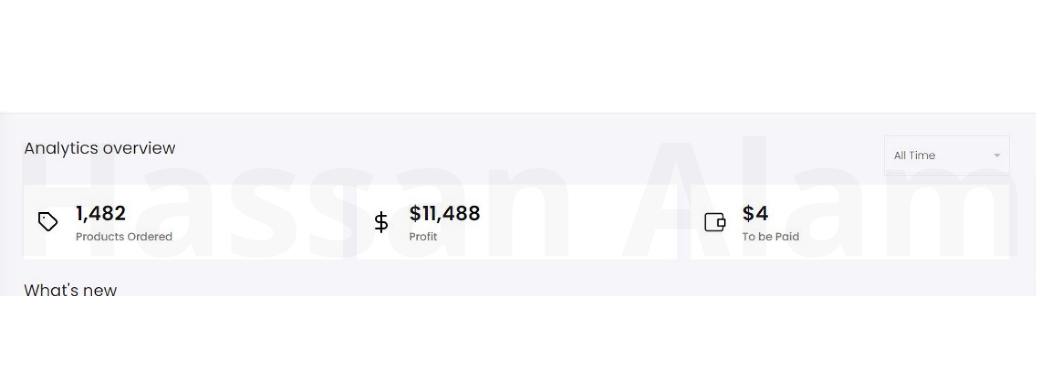
My Teespring analytics show the scale of that business. In one view, the account shows $11,138.21 in total profit from 1,122 orders and 1,232 units sold. Another view of the same business shows 1,482 products ordered and $11,488 in profit. These are real dashboard numbers from my own account, not estimates.
Moving from T-shirts to personalized jewelry
After a while in the T-shirt business, I learned an important lesson. If you stick with only one idea, you cannot grow. You have to keep looking for better opportunities, not just for the business but for yourself. I saw that personalized products had huge demand in the USA. People buy them as gifts for their loved ones, and that kind of purchase has real emotion behind it.
The problem was that Teespring did not have these products at that time. So I found another platform, Gearbubble. It is a print on demand platform like Teespring, but it has more products, including personalized jewelry.
I started selling personalized jewelry on Gearbubble, and the response surprised me. When I shared a jewelry product with my potential customers, I got high engagement, and many customers bought from a single post I shared on my niche page. That was the moment I understood the demand. I started creating more personalized products that matched what my customers actually needed.
My niche was emotional, personal products. Memorial jewelry was a big part of it. Products like "In Loving Memory of My Son" necklaces and "Mother of an Angel" pendants sold well, because they meant something real to the buyer. This was not a random product. It was a product for a person who had lost someone, or a mother remembering a child. When you sell something like that, you have to respect the customer. The product has to be good, the message has to be honest, and the delivery has to be reliable.
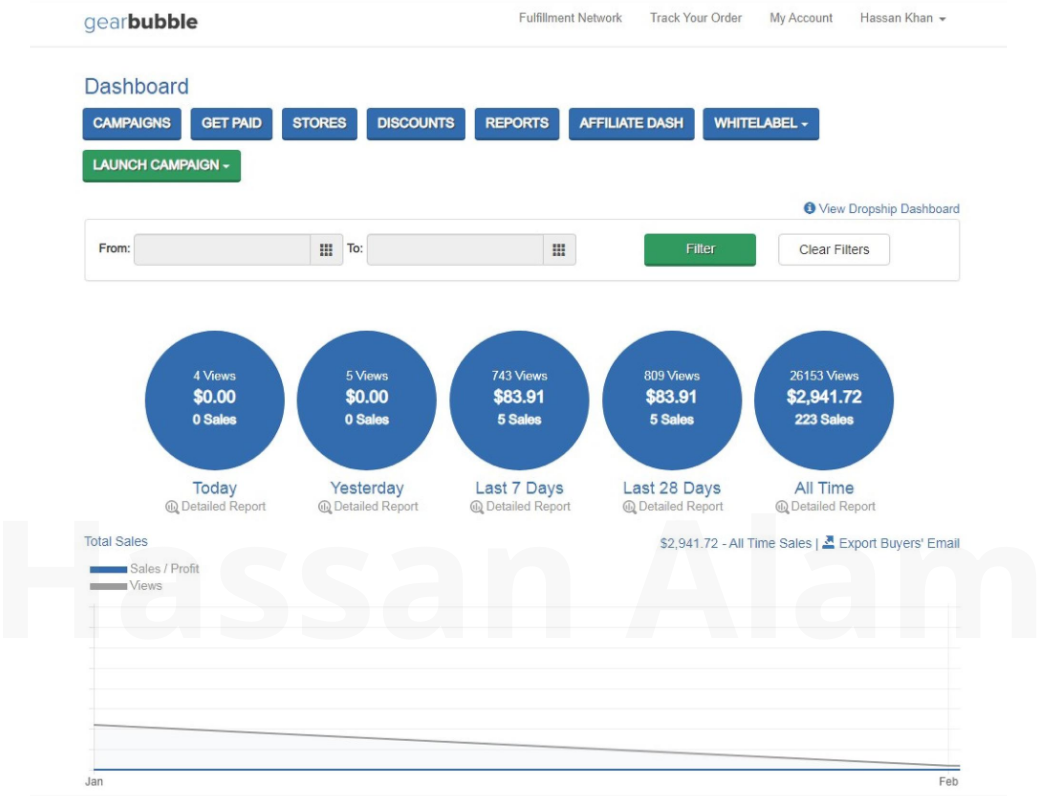
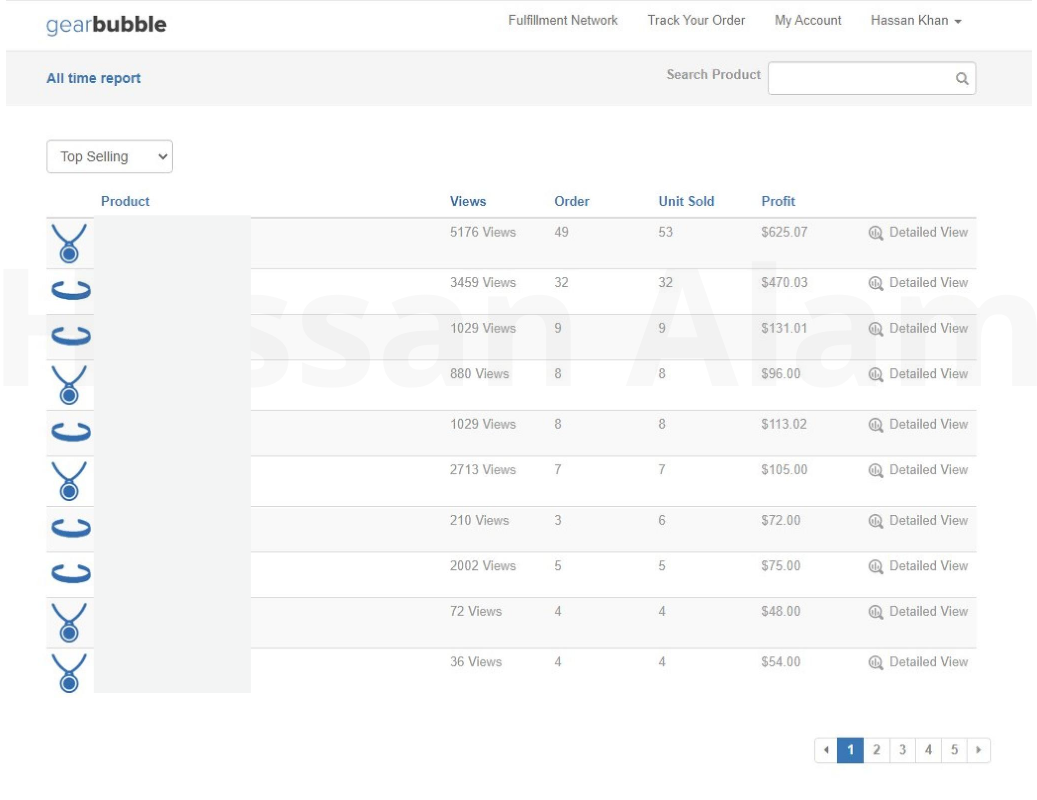
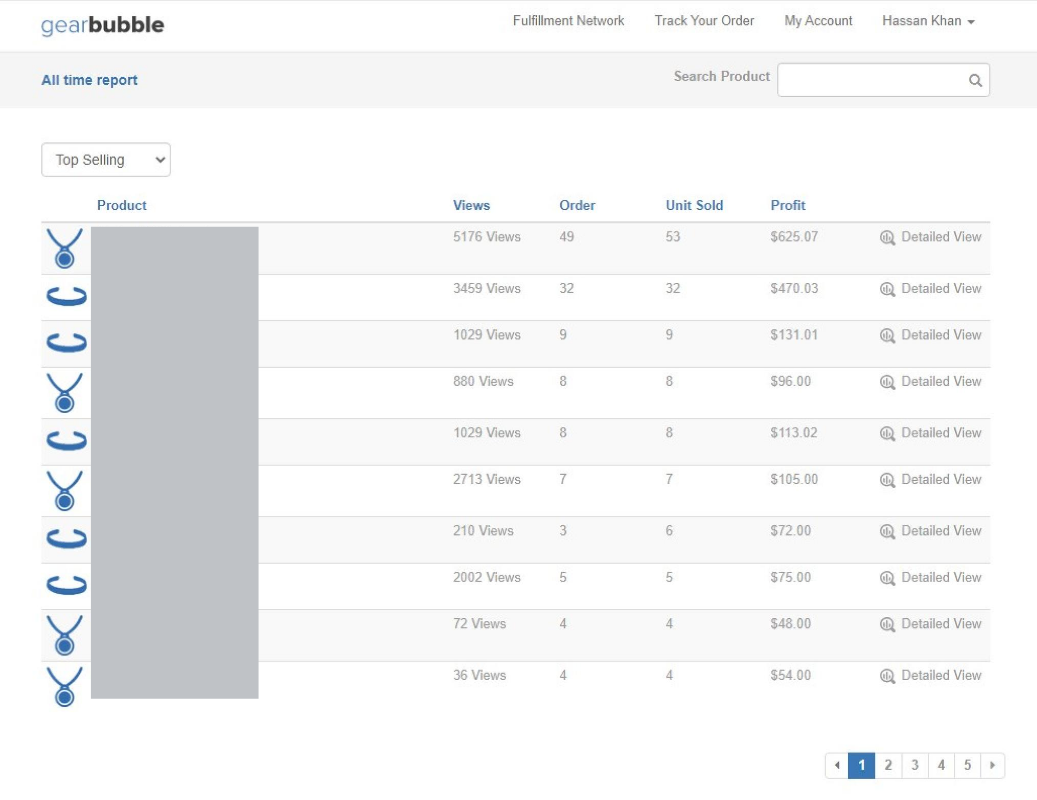
The Gearbubble numbers tell the same story in smaller figures. The dashboard shows $2,941.72 in all-time sales from 223 sales. The top-selling product alone made $625.07 in profit from 53 units sold, and the second made $470.03 in profit from 32 units. One product does not make a business. A set of products that people actually want does.
The real problem with print on demand
Every business model has pros and cons, and print on demand has a real con: low profit margins. The product cost is high, and the marketing cost is high because competition is strong. If you are selling online, you have to increase your profit margin as soon as you can, or you will not survive.
That is why I moved on. Print on demand taught me how to sell physical products online and how to serve customer demand. But I wanted a higher margin, and I wanted to build a brand in my niche, not just sell on someone else's platform. That is what took me to Shopify.
Part 2: Moving to Shopify dropshipping
Why I moved to Shopify
In June 2016 I started my Shopify store, Perveengoods, at perveengoods.com. I moved for two reasons. First, I wanted a higher profit margin than print on demand could give me. Second, I wanted to build my own brand in my niche, on my own store, instead of selling only through other platforms.
On Shopify I did not just sell clothing and jewelry. I also sold different dropshipping products that were in demand at the time. I was still a beginner, with basic e-commerce and marketing skills, so I was learning every day while I was running the business. That is the honest truth about this stage. I was not an expert. I was a learner who kept going.
The first seven months
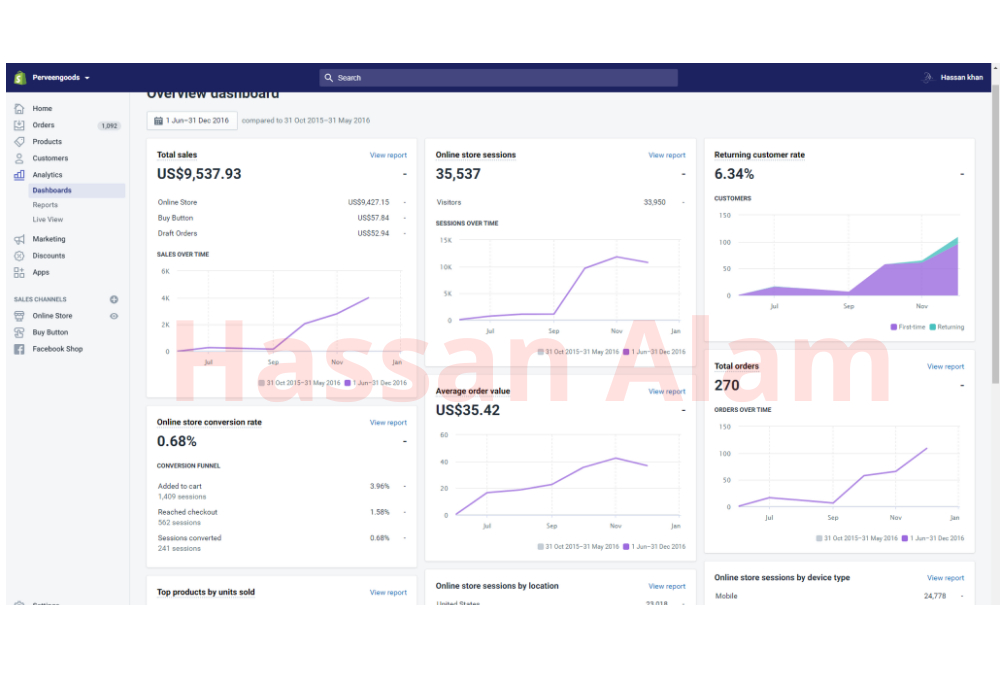
I started Shopify in June 2016, and in the first seven months I made $9,500 from 270 orders. My profit was around 35% to 40%, which was very profitable for me. It was a proud moment. I had worked hard, with full dedication and patience, and the numbers showed it.
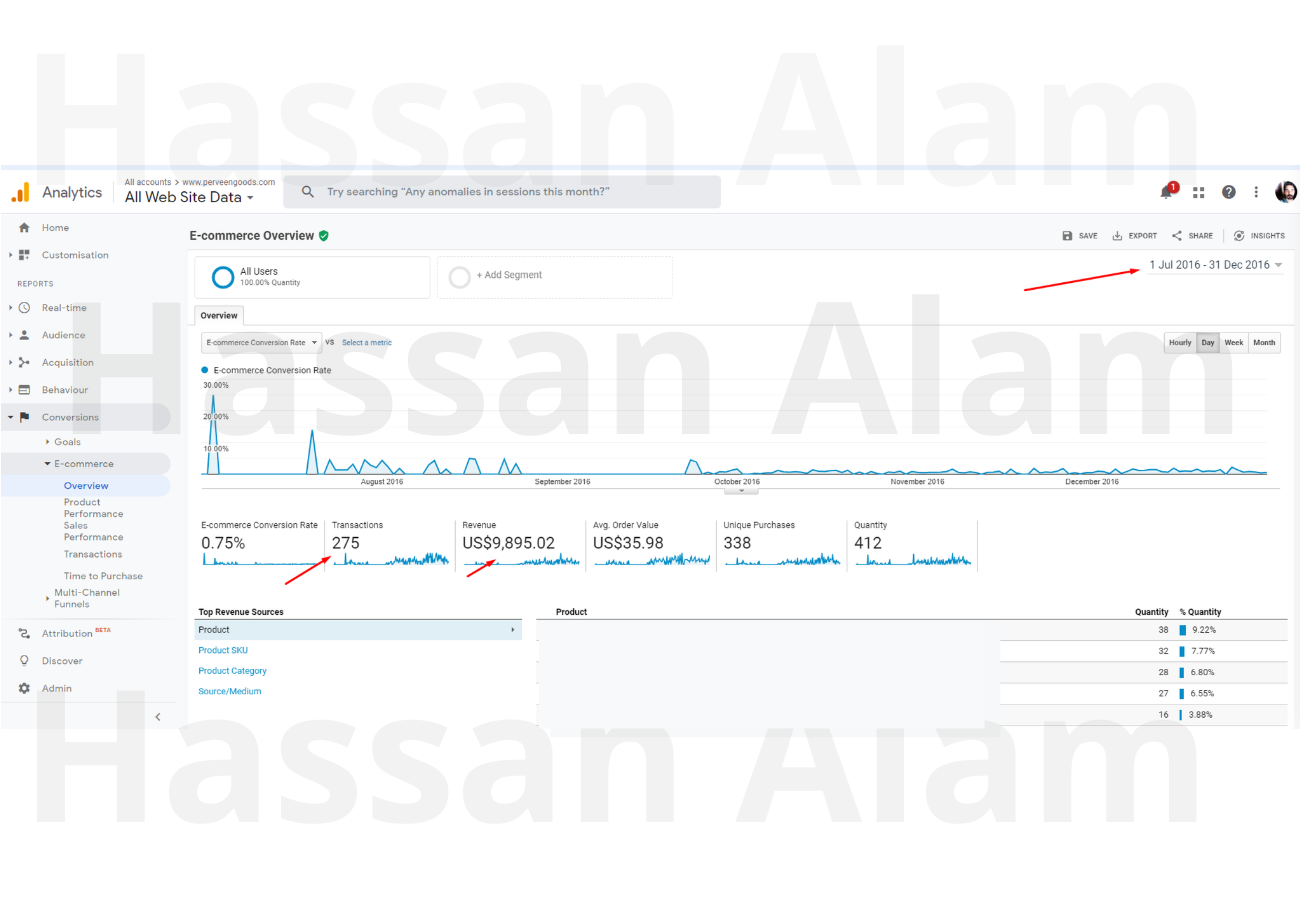
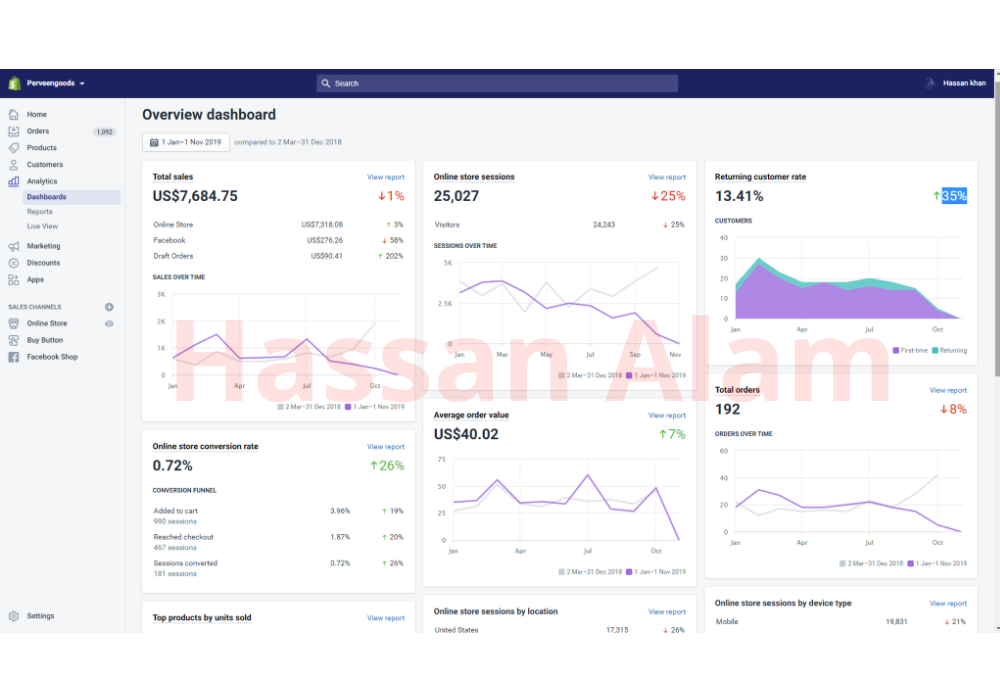
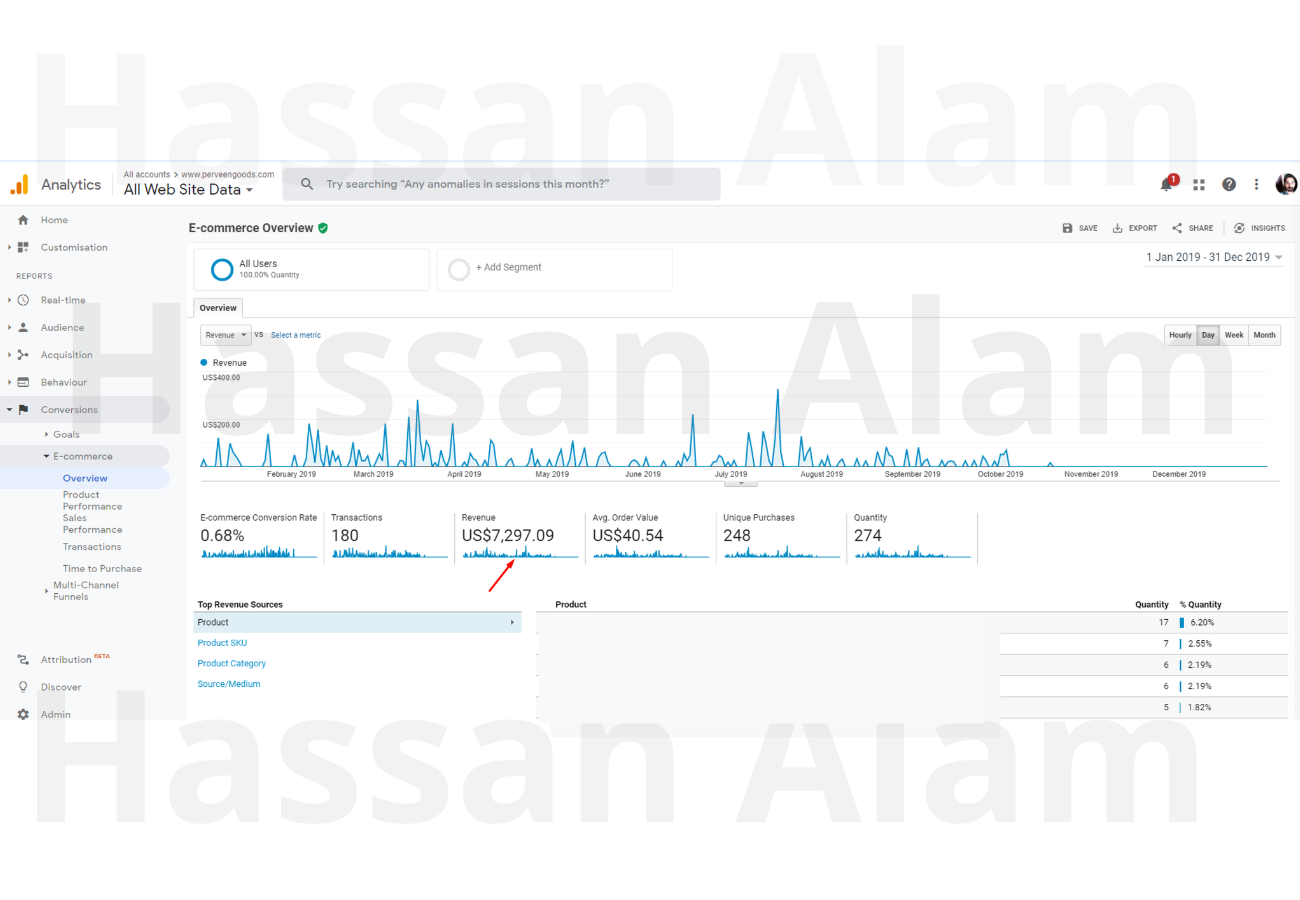
My Shopify dashboard confirms those first months. For 2016 the store shows $9,537.93 in total sales from 270 orders. Google Analytics for the same period shows $9,895.02 in revenue from 275 transactions, with an average order value of $35.98 and a conversion rate of 0.75%. The small difference between the two tools is normal. Different tools count orders in slightly different ways. The picture is the same: a new store, doing real sales, in its first months.
The next three years, year by year
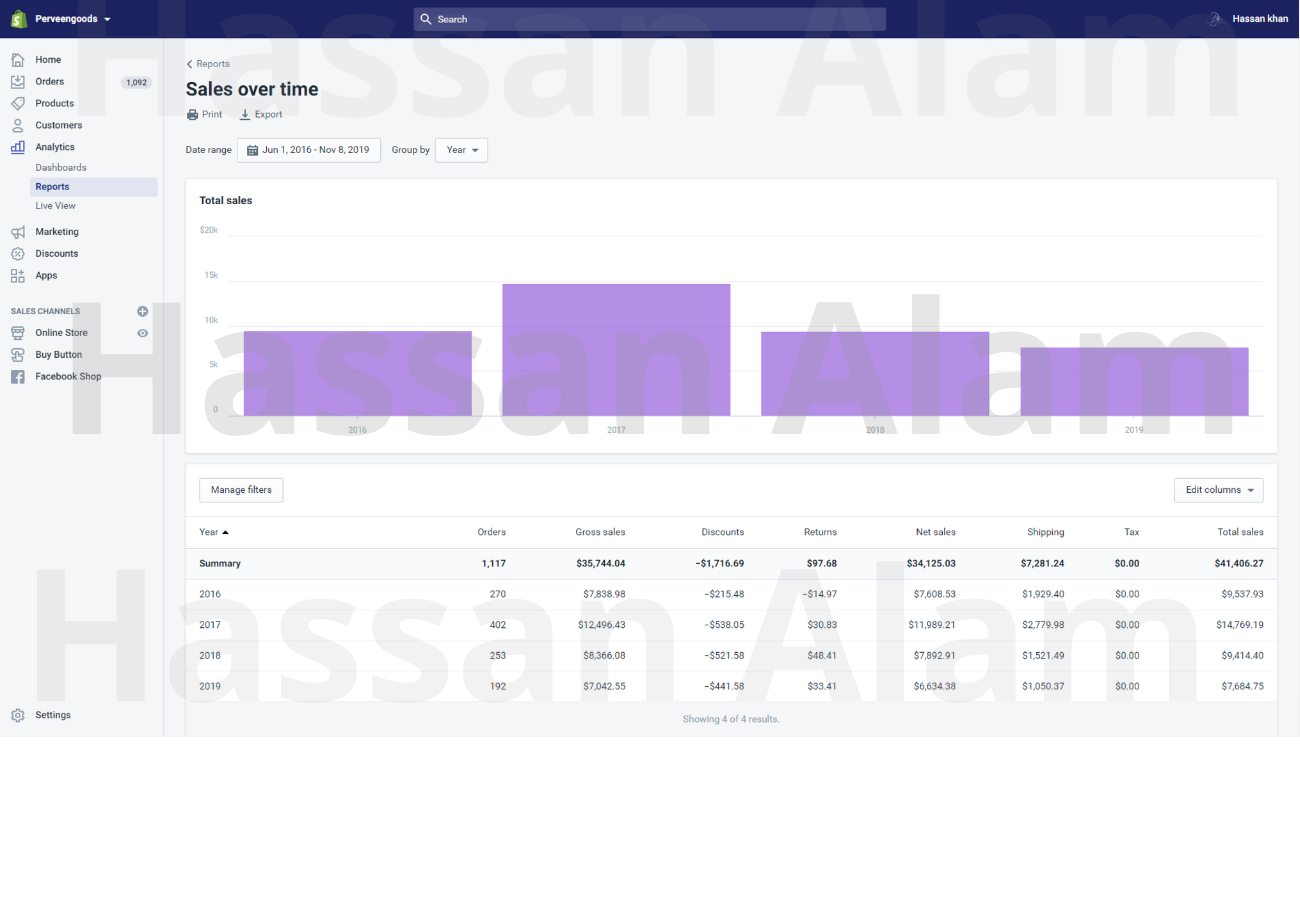
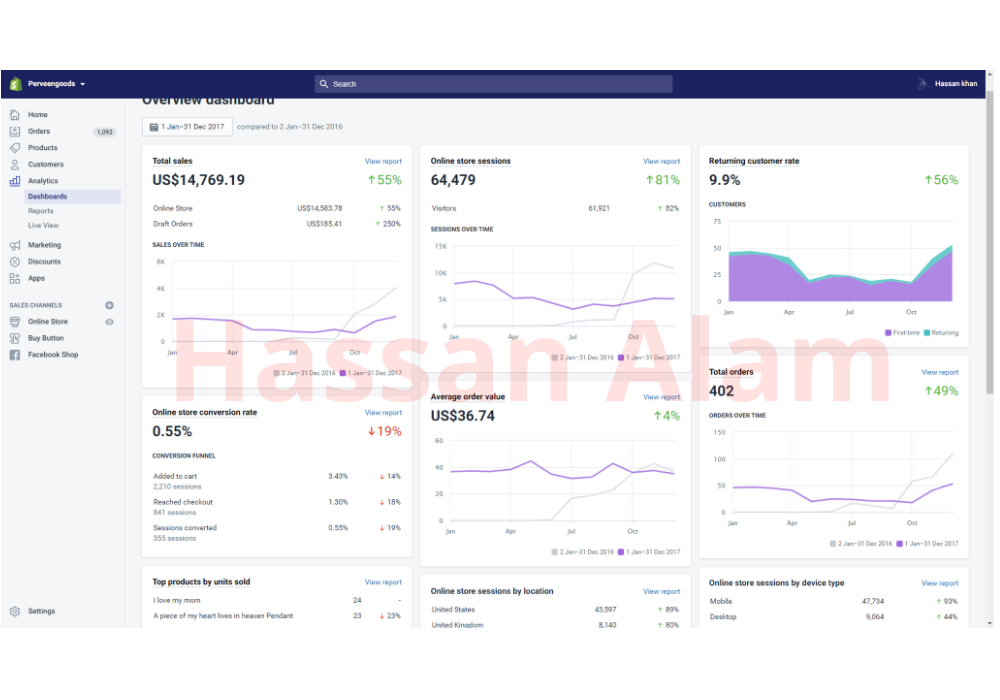
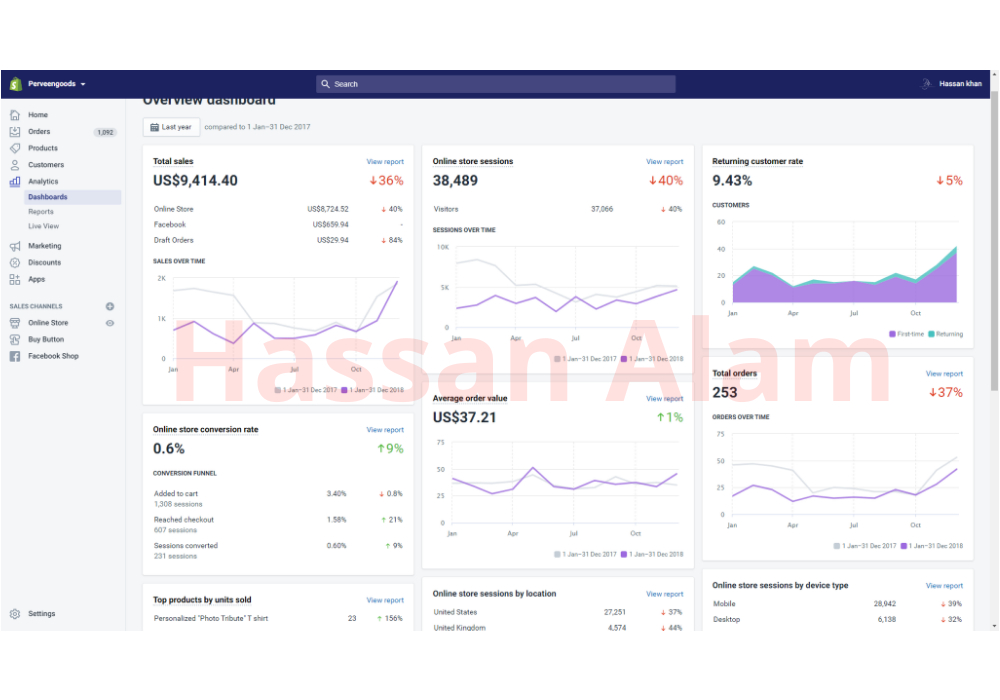
I spent four years in this Shopify business. Here is what each year looked like, from my own Shopify dashboard for June 2016 to November 2019:
- 2016: $9,537.93 in total sales, 270 orders. The store was new, and I was learning.
- 2017: $14,769.19 in total sales, 402 orders. This was my best year. The store was growing, I was launching more products, and the Facebook page was bringing steady traffic.
- 2018: $9,414.40 in total sales, 253 orders. Sales went down from 2017, but the store was still doing real business.
- 2019: $7,684.75 in total sales, 192 orders. Sales went down again, and this was the year everything changed.
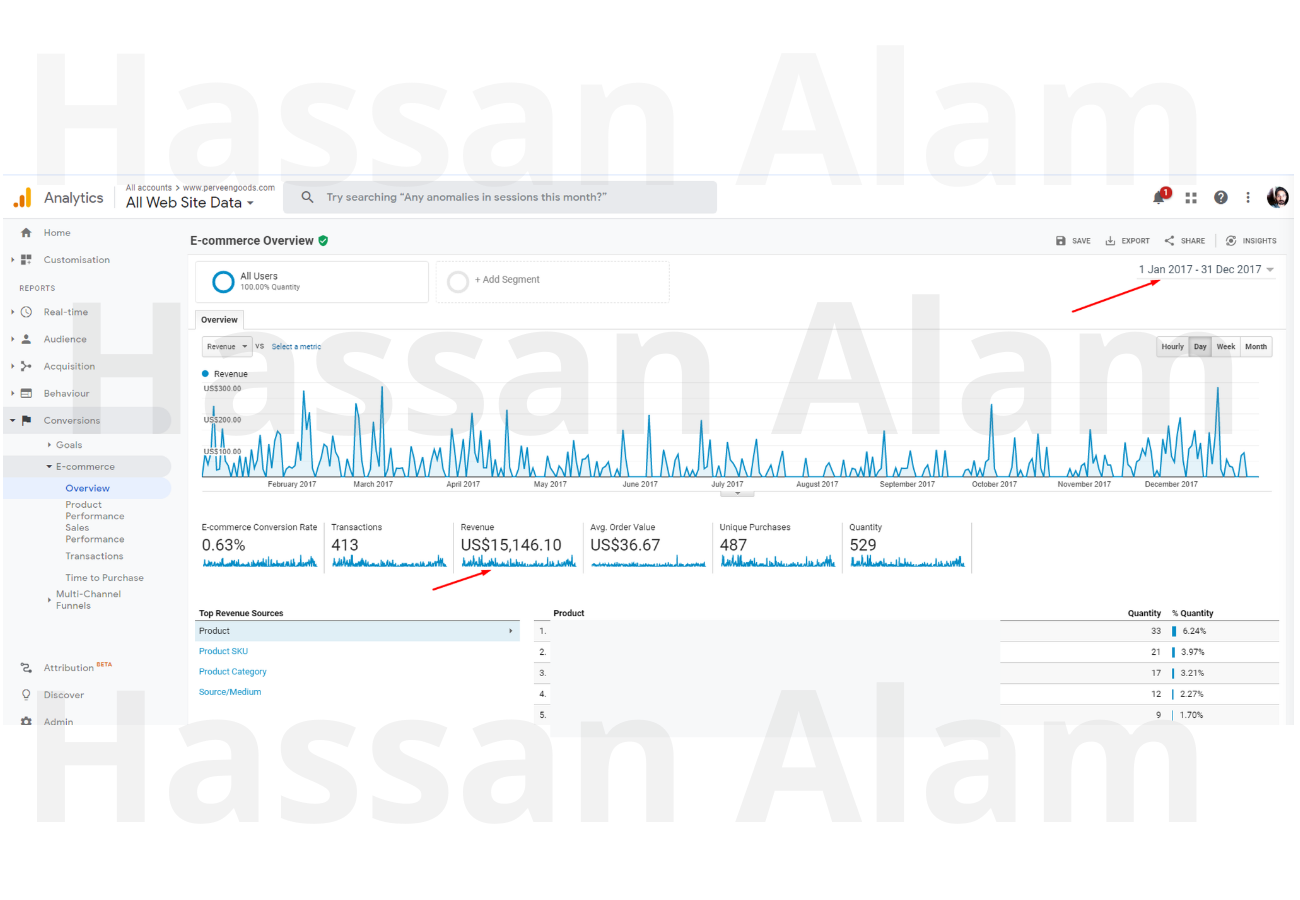
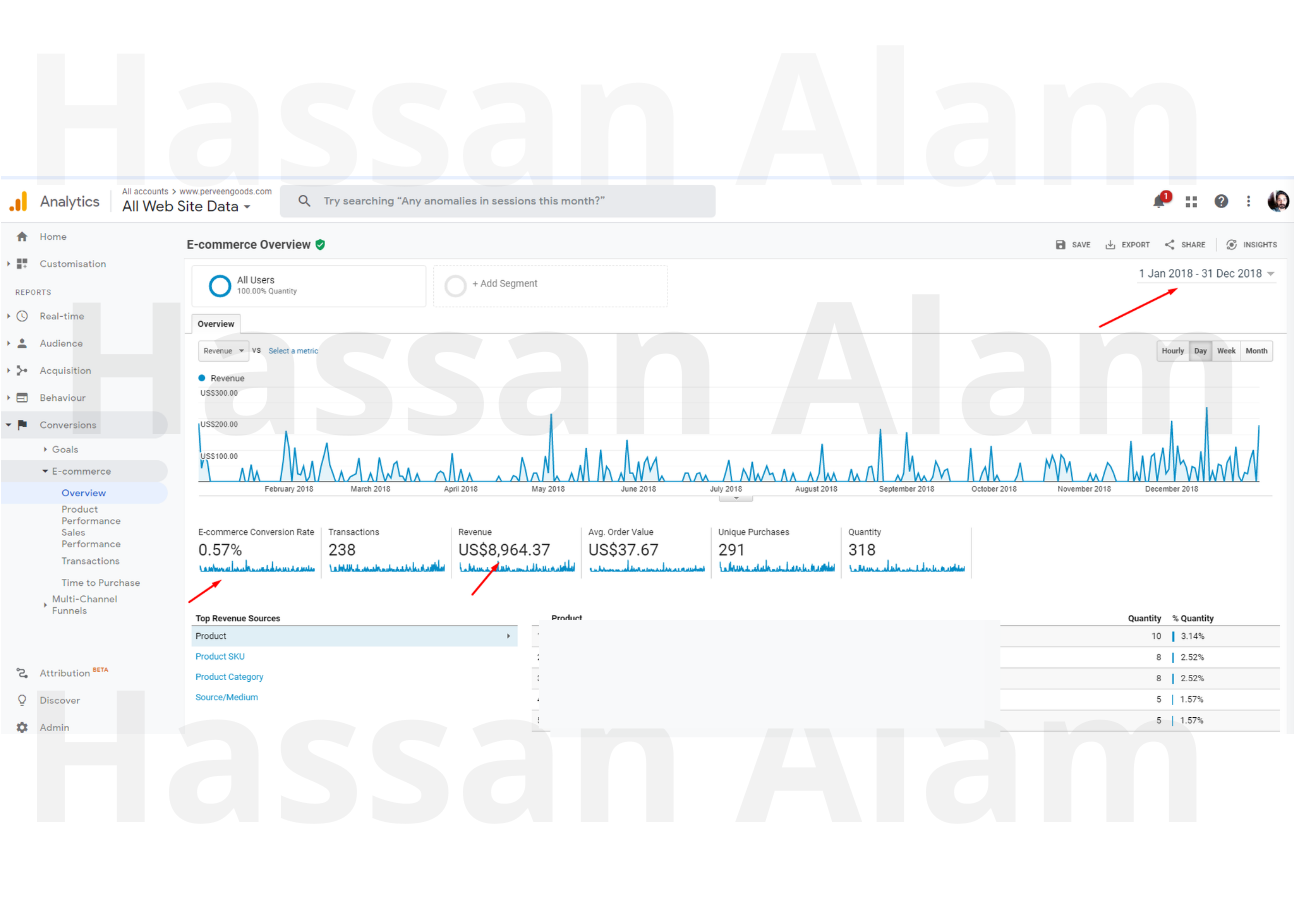
Over the full period, the store did 1,117 orders, $35,744.04 in gross sales, $34,125.03 in net sales, and $41,406.27 in total sales including shipping. Google Analytics tells a similar story: $15,146.10 in revenue in 2017 from 413 transactions, $8,964.37 in 2018 from 238 transactions, and $7,297.09 in 2019 from 180 transactions.
I am sharing the down years as well as the good year, because that is what a real case study is. 2017 was my best year, and the years after it were harder. If I only showed you 2017, you would get the wrong idea.
How I found products and got traffic
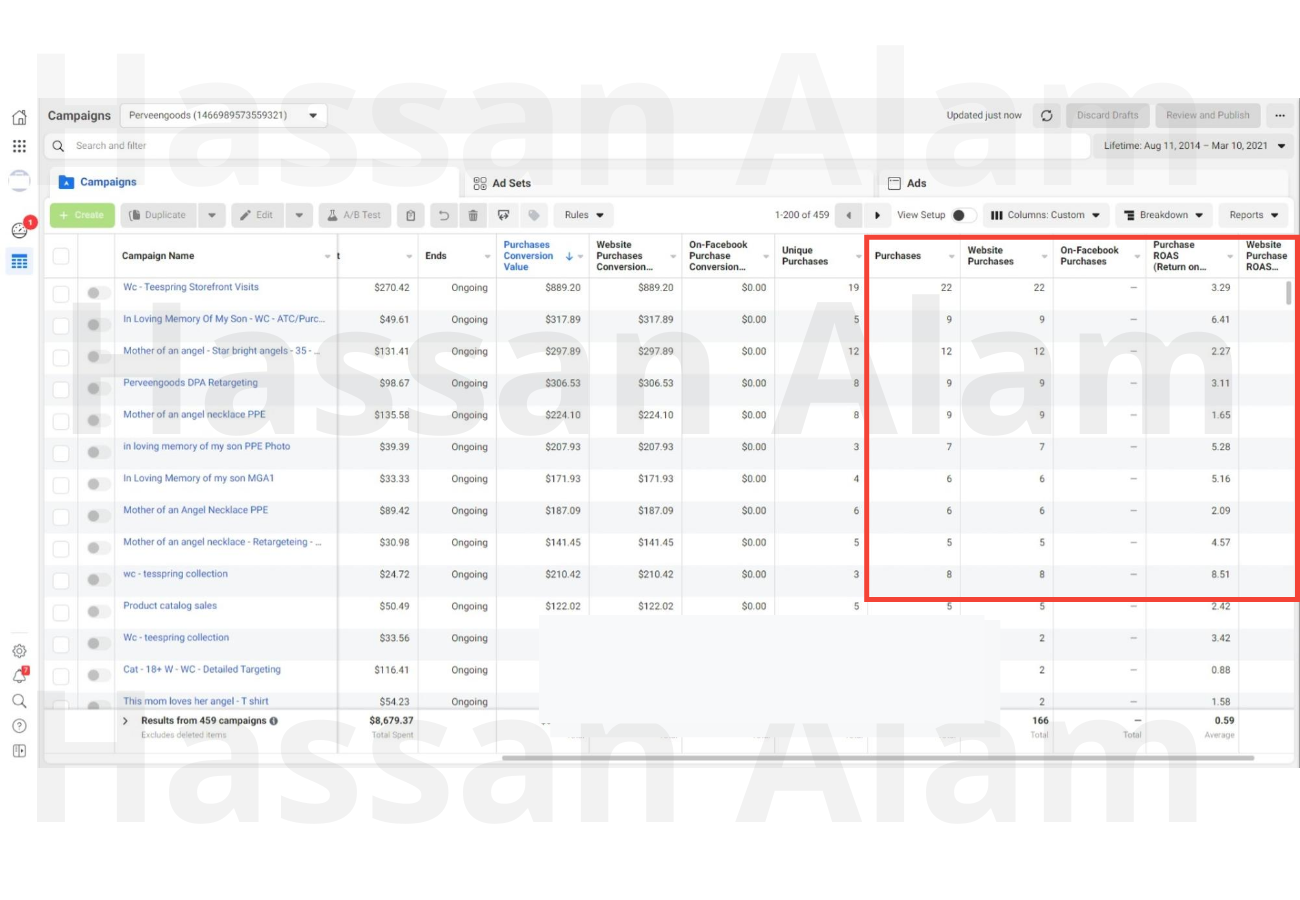
Whenever I launched a new product, I shared it on my Facebook niche page to get sales. That page was my main source of traffic. I tested many high-demand products in competitive niches. I spent around $9,000 on Facebook marketing just for testing. Some products failed. A few broke even. A few worked.
My Facebook Ads Manager shows the scale of that testing. Over the lifetime of the account I spent $8,679.37 across 459 campaigns, which brought 166 purchases. That is a lot of testing, and most of it did not make money on its own. Testing is how you find the products that do work. You have to accept that most tests will fail.
Sales vs profit: what the $41,000 really means
This is important, so let me say it clearly. The $41,406 is sales, not profit. It is the total money customers paid, including shipping. The gross sales were $35,744.04, and the net sales after discounts and returns were $34,125.03.
In the first seven months my profit was around 35% to 40%. That margin did not stay the same. As I spent more on ads and tested more products, the margin got thinner. That is normal in dropshipping. The typical net margin for a dropshipping store is around 10% to 30%, and for an experienced seller it is often 15% to 20%. Beginners usually make less than 10%, and many lose money while they are testing. My business followed that same pattern. The early margin was good. The later years were harder.
If you read any case study that shows you a sales number and calls it profit, be careful. Sales is what customers pay. Profit is what is left after the product cost, the ad cost, the platform fees and the refunds. Always ask for the profit number.
The day my traffic disappeared
Everything was going well, and the store was my only source of active income. The Facebook page was my only source of traffic, because I had very basic knowledge of Facebook marketing and I could not run more campaigns or invest more in marketing.
I knew I needed an advanced marketing strategy to scale. I started improving my Facebook marketing skills when I realized I had to do marketing to grow. But things do not always go as you plan.
In 2019 Facebook made major algorithm updates and started deleting many celebrity pages and news publishing pages. Two of my very small pages were already deleted. I was tense and frustrated. What if Facebook deleted my niche page, which had approximately half a million likes?
I knew it could happen any time. If they could delete celebrity pages, why not mine? After a month, they deleted my niche page without sending me any warning. I was very disappointed and demotivated, because that page was generating my income and I was dependent on it.
That is the biggest lesson of this whole case study. If your start is good, and better than you expected, that does not mean it will stay that way forever. You must be prepared for hard times. I learned that you should never build a business on one traffic source that you do not own. A Facebook page, an Instagram account, a marketplace store: all of them can be taken away. Your own website, your own email list, and your own customers are the only assets you really control.
Print on demand vs dropshipping: which makes more money?
I have done both, so here is my honest answer from my own businesses.
- Print on demand gave me lower sales per product, but it was simple. No stock, no supplier problems, and the platform handled fulfillment. The margin was low, and that was the main problem.
- Shopify dropshipping gave me higher sales and a higher margin, especially in the beginning, when my profit was 35% to 40%. But it was harder. I had to find products, test them with paid ads, handle suppliers, and deal with more customer problems.
- In total numbers, Shopify made more money for me: $41,406 in sales against $15,000 from print on demand. But Shopify also cost me more in ads, about $9,000 just for testing.
Which one is better for a beginner? Print on demand is better to start, because the risk is low and you learn how to sell. Dropshipping is better when you are ready to spend money on testing and you want a higher margin and your own brand. That was my path, and it is the path I would suggest to a beginner today: start with print on demand, learn to sell, then move to Shopify when you are ready.
Is dropshipping still profitable in 2026?
Yes, but not in the easy way people imagine. The margins are thin, usually 10% to 20% net for a good seller, and the easy version of dropshipping is dead. You cannot just pick a random product, run one ad, and get rich.
What still works is what worked for me: pick a real niche, find products people actually want, test them properly, watch your numbers, and build a brand people trust. You also need more than one way to get traffic. If all your traffic comes from one platform, you are one algorithm update away from losing everything. I learned that the hard way.
If the model itself is new to you, my guide to what dropshipping is and how it works in 2026 explains the full order flow, the real costs and the margins to expect, step by step.
What I would do differently if I started again
- I would build an email list from day one. An email list is traffic you own. A Facebook page is not.
- I would not depend on one traffic source. I would learn search traffic and content marketing alongside paid ads — today that also means getting cited by AI search engines, not just ranking in Google.
- I would track profit, not just sales. Sales feel good. Profit is what pays the bills.
- I would test faster and kill losing products sooner. I spent $9,000 on testing, and some of that money went to products I should have stopped earlier.
- I would learn advanced Facebook marketing sooner, instead of waiting until I needed to scale.
- I would treat the store as a brand from the start, not as a place to test random products.
Frequently asked questions
How much can you make with print on demand?
It depends on your niche, your designs and your traffic. I made $15,000 in sales over about two and a half years, with $11,138.21 in total profit on my Teespring account. Some sellers make a few hundred dollars a month. A few make much more. Most stores do not survive three years, so the real question is not how much you can make, but whether you can keep going long enough to learn what sells.
Is print on demand still profitable in 2026?
Yes, but the margins are tight. Typical gross margins are around 40% to 60%, and net margins around 20% to 35%. It is profitable if you have a real niche, good designs, and traffic you do not have to pay a lot for. It is not profitable if you pay high ad costs for low-priced products.
How much do dropshippers make on average?
Most dropshippers make little or nothing in the beginning. Experienced sellers usually make 15% to 20% net, and the overall range is around 10% to 30%. My Shopify store did $41,406 in sales over four years, with a 35% to 40% profit margin in the first seven months and thinner margins later as ad costs grew.
Is dropshipping still profitable in 2026?
Yes, if you do it properly. You need a real niche, tested products, honest margins, and more than one traffic source. The easy, fast-money version is gone, and it was never as easy as the videos made it look.
Which is better for beginners, print on demand or dropshipping?
Print on demand is better to start with. The risk is lower, you do not hold stock, and you learn how to sell. Move to dropshipping when you are ready to spend money on testing and build your own brand. That is the path I took.
How much money do you need to start Shopify dropshipping?
You need money for the store, for product samples, and for testing ads. I spent around $9,000 on Facebook ads just for testing over the life of my store. You can start with less, but you should not start with zero. Testing costs money, and you need enough to test properly and still keep going after the first failures.
Can you do print on demand and dropshipping on the same Shopify store?
Yes. That is exactly what I did on Perveengoods. I sold clothing and personalized products alongside dropshipping products. The store was one brand, in one niche, with different types of products for the same customers.
Why do most dropshipping stores fail?
Most fail because they depend on one product, one ad, or one traffic source, and they stop when the first tests fail. Supplier problems are another big reason. And many new sellers watch their sales number instead of their profit, so they do not notice they are losing money until it is too late.
The short version
I started with print on demand in 2014, made $15,000 in sales, and learned how to sell. I moved to Shopify in June 2016, built Perveengoods, and made $41,406 in sales over four years. Then Facebook deleted the page that brought me almost all my traffic, and I learned the hardest lesson of all: never build your whole business on traffic you do not own. If you are starting today, start small, learn to sell, track your profit, build an email list, and do not depend on one platform. That is the whole case study, in one paragraph.
Thank you for reading. If you have any questions about this case study, or about starting your own e-commerce business, you can contact me through the contact page on this website.